Pack for the places you will visit, the weather on your dates, and the luggage you can carry between stations and hotels. A city route through Tashkent, Samarkand, Bukhara, and Khiva needs different equipment from a mountain trek or winter-sports trip.
Start with comfortable walking shoes, clothing you can layer, travel documents, and a reliable phone setup. We checked the linked airline, tourism, and health guidance on 28 October 2026.
Choose luggage for the route
Check the baggage allowance on every flight in your itinerary, including any separately booked domestic segment. A generous international allowance does not establish what another ticket permits. Include the weight of the bag itself and any gifts you intend to bring home.
For trains and old-town accommodation, consider how you will lift and move your bag. Ask the property about vehicle access, stairs, and luggage help. Choose a bag you can manage when a platform, lane, or entrance requires you to carry it for part of the journey.
Keep a small personal bag for documents, medicines, chargers, and one change of clothes. If a checked bag arrives late, you should still be able to reach the hotel and manage the first night. See the arrival guide for the documents and contact details to save.
Clothing for city sightseeing
Take clothes you can walk and sit in for a full day. Test new shoes before departure and plan for the amount of walking in your itinerary. Add socks that work with your footwear and a spare pair for a long transfer day.
Choose layers you can combine rather than one outfit for every photograph. Ask your accommodation about laundry service or nearby options if that helps you reduce luggage. Check the turnaround time before relying on laundry during a short stay.
For religious sites, carry clothing that can meet the site's covering requirements and shoes you can remove when instructed. A light scarf can be useful for travelers who may need a head covering. Follow the rules at the actual place you visit; requirements can differ between sites.
Adjust for the season
Spring and autumn
Pack layers for changes through the day and a rain layer if the forecast calls for it. Compare the forecast for each city rather than packing from one national average. The seasonal guide explains why April–May and September–October are useful starting periods for a city trip.
Summer
Choose breathable clothing, sun protection, and a hat you can wear while walking. Plan how you will carry water and take breaks. Reduce what you carry during a hot sightseeing day and keep essentials close to hand.
Winter
Pack for the forecast low temperatures and the time you expect to spend outside. Consider a warm outer layer, hat, gloves, and footwear suited to the conditions. Confirm heating and transport arrangements if either affects your accommodation choice.
Mountains and outdoor excursions
Ask the operator for a route-specific equipment list, including footwear, weather protection, communication, and any specialist gear. City weather cannot establish trail or road conditions. Confirm what the operator provides and whether your insurance covers the activity before buying or renting equipment.
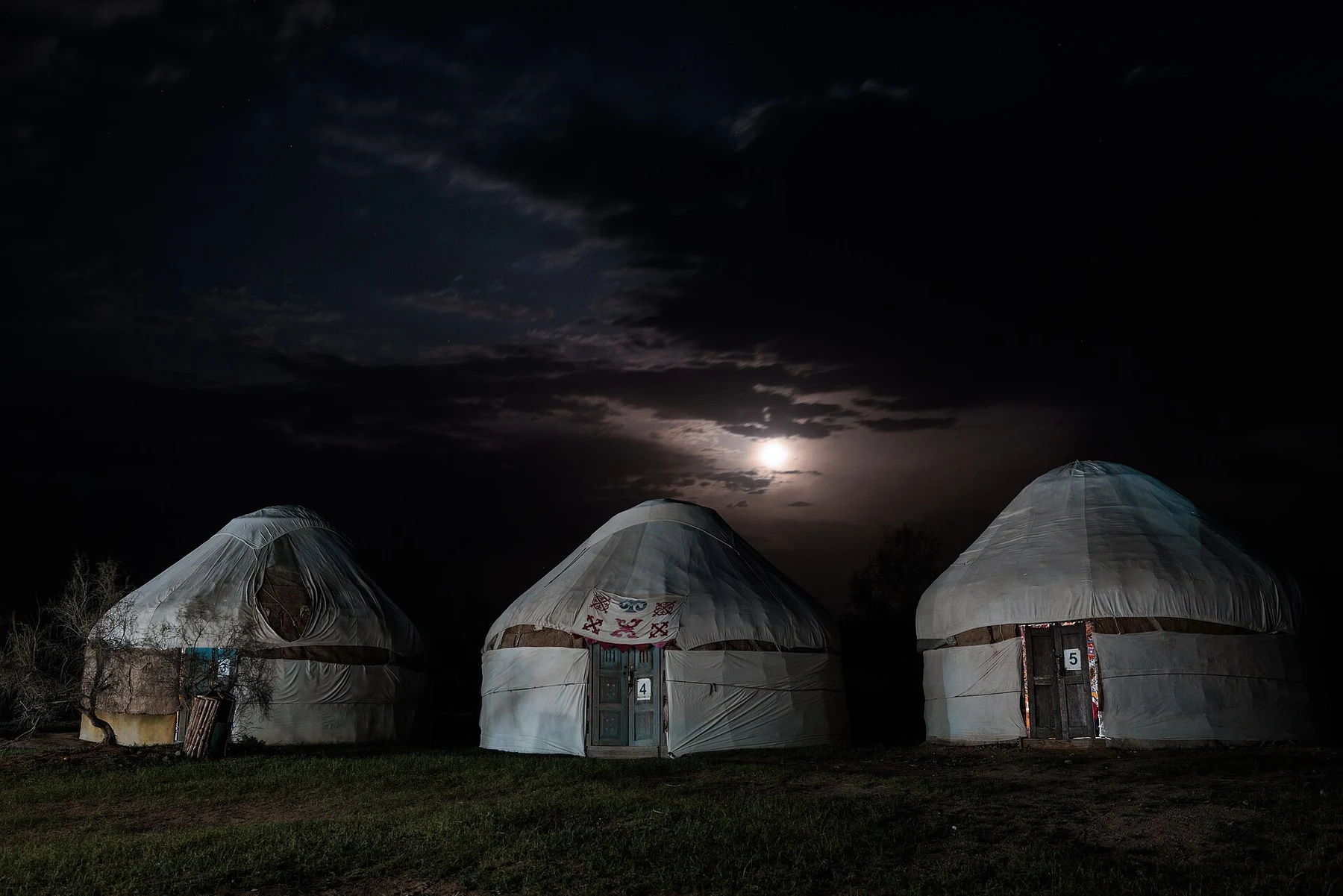
Yurts at night in the Kyzylkum desert. Photo: Carsten Siegel. CC BY-SA 4.0.

Electricity: check the label on each device
The official-event visitor guide lists type C and F sockets, 220 volts, and 50 Hz for Uzbekistan. U.S. travelers should check whether each device accepts that voltage; a plug adapter changes the connection shape, not the voltage.
Read the input label. Many chargers specify a range such as 100–240 V, but verify your own equipment. Do not assume a hair tool, medical device, or older appliance accepts the same input as your phone charger. Travelers from Europe or the UK should also check plug compatibility and the device label.
Bring the appropriate adapter and the cables you need. Ask a qualified specialist about a device if its voltage requirements are unclear, particularly for equipment you depend on during the trip.
Phones, chargers, and power banks
Bring your phone charger, a backup cable if you rely on the device, and any adapter required by your accommodation. Save maps, tickets, and contact details offline before a transfer. Keep a battery reserve for the final part of the journey rather than using it all during the flight.
Read the operating airline's current battery rules. Uzbekistan Airways' restrictions prohibit power banks in checked baggage and set conditions on carriage and use. Other carriers may apply their own limits, so check every flight. Protect batteries from short circuits and follow crew instructions.
Before you depart, choose your SIM or eSIM arrangement. Check whether the phone is unlocked and compatible and whether you need your home line for banking messages. A charger and an adapter will not solve an account-verification problem at arrival.
Medicines and health preparation
Carry essential medicines in their original labeled packaging with the prescription or supporting letter you need. Confirm Uzbekistan's import rules for the exact medicine, including its generic ingredient, and check any transit-country restrictions. A legal prescription at home does not settle the rules abroad.
Use the UK health guidance, CDC destination page, and the appropriate service in your country to prepare. Discuss vaccinations, existing conditions, allergies, and activity plans with a travel-health professional. Ask about storage and the documentation required for temperature-sensitive or controlled medicines.
Keep essential medicines in accessible luggage subject to security rules. Add only supplies you know how to use, and keep insurance assistance details with them. Arrange appropriate medical and evacuation cover rather than expecting a general travel packing list to meet your clinical needs.
Documents and backups
Keep the passport you will travel with, any required visa or approval, tickets, insurance details, and accommodation information accessible. Check the relevant entry requirements and save the first night's address offline.
Keep secure copies separate from the originals for recovery. If you store digital copies, protect the account and make sure you can access it from a backup device. Avoid publishing passport pages or sending them to unverified travel-group contacts.
During the trip, keep accommodation-registration records with your travel documents. Our registration guide explains what to ask at check-in and when moving between places.
Small items that make transfers easier
Consider a reusable day bag, tissues, hand-cleaning supplies, sunglasses, and a pen for forms. Bring a modest payment reserve and a backup card rather than storing all payment access in one wallet.
If you use contact lenses, glasses, mobility aids, or another daily aid, think through the replacement plan. Ask the provider or accommodation about the specific support you need. Families should arrange child seats and sleeping equipment before arrival rather than relying on an unspecified “family friendly” description.
Gifts and equipment to check before carrying
Check current rules before bringing drones, professional filming equipment, specialist communications devices, or items subject to customs restrictions. Ask the relevant authority about your actual item and intended use. Avoid using a packing recommendation from another country as permission to import equipment into Uzbekistan.
For the return journey, check your home country's food, plant, animal-product, and other import rules before buying souvenirs. Leave luggage space and weight for purchases you can bring home legally.
A final packing check
Lay out the things you need for the first night, then confirm you can reach them without opening every bag. Weigh the luggage against the tightest ticket allowance, test your walking shoes, and verify chargers and document access.
Pack for the itinerary you have booked. You can use the accommodation, transport, and safety guides to check the parts that affect what you carry.
Sources and review
We checked the linked visitor guide, airline battery policy, and government and health-agency preparation pages on 28 October 2026. The packing suggestions are editorial advice. Confirm equipment, medical, customs, and baggage requirements for your own route and circumstances.
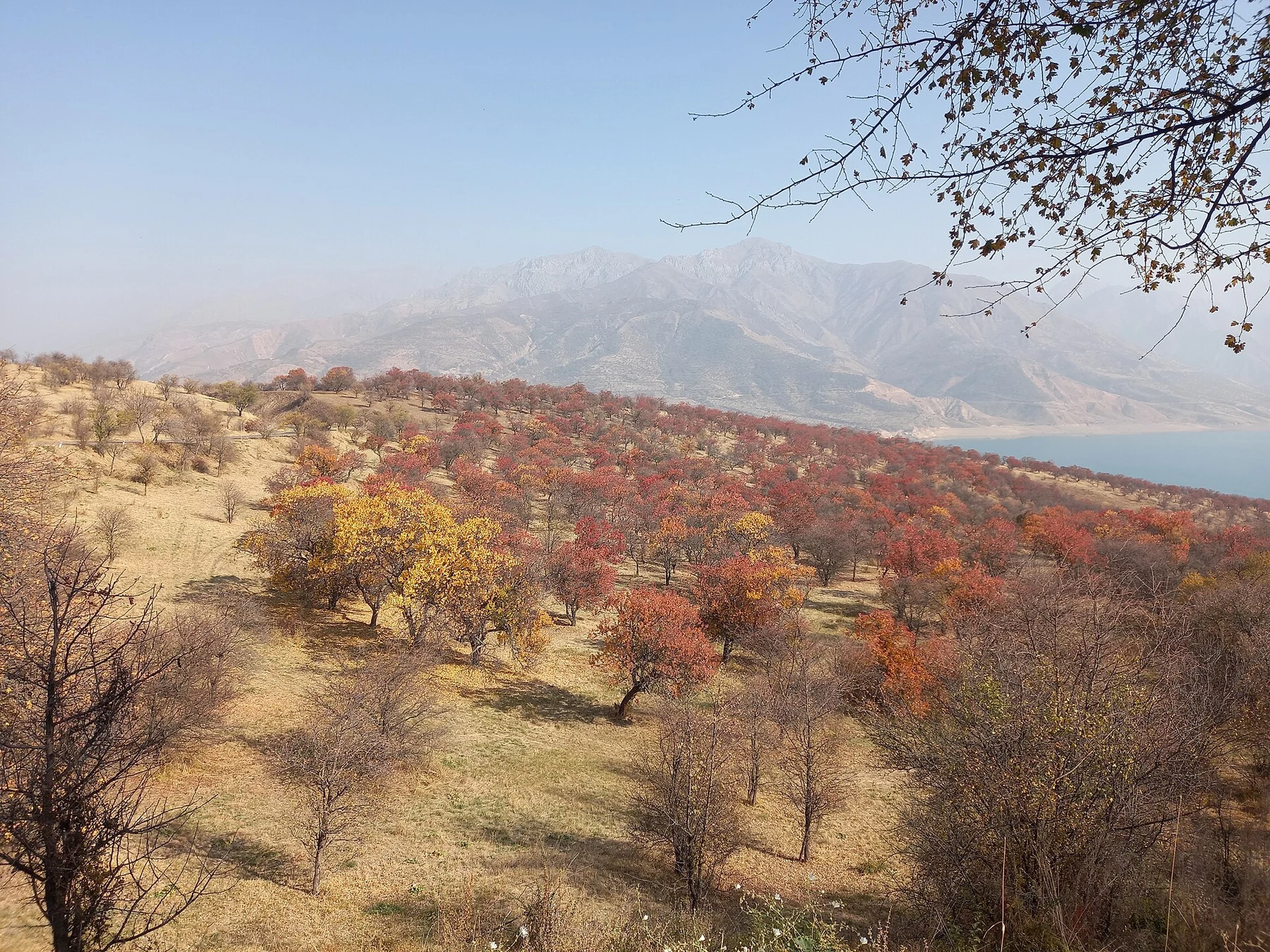
Autumn in the Charvak region. Photo: Anvarov Bobur Baxtiyor o'g'li. CC BY-SA 4.0.
