Make room in your Uzbekistan itinerary for a plov lunch, fresh bread, dumplings, and a visit to a bazaar. You can learn as much about a place from a meal and a conversation as from another rushed monument stop. Choose a few dishes across the trip and ask how each kitchen prepares them.
We checked the linked food, tourism, and health sources on 28 October 2026. Names and recipes vary, so use this guide to decide what to ask for rather than as an ingredient guarantee.
Begin with plov, also called palov or osh
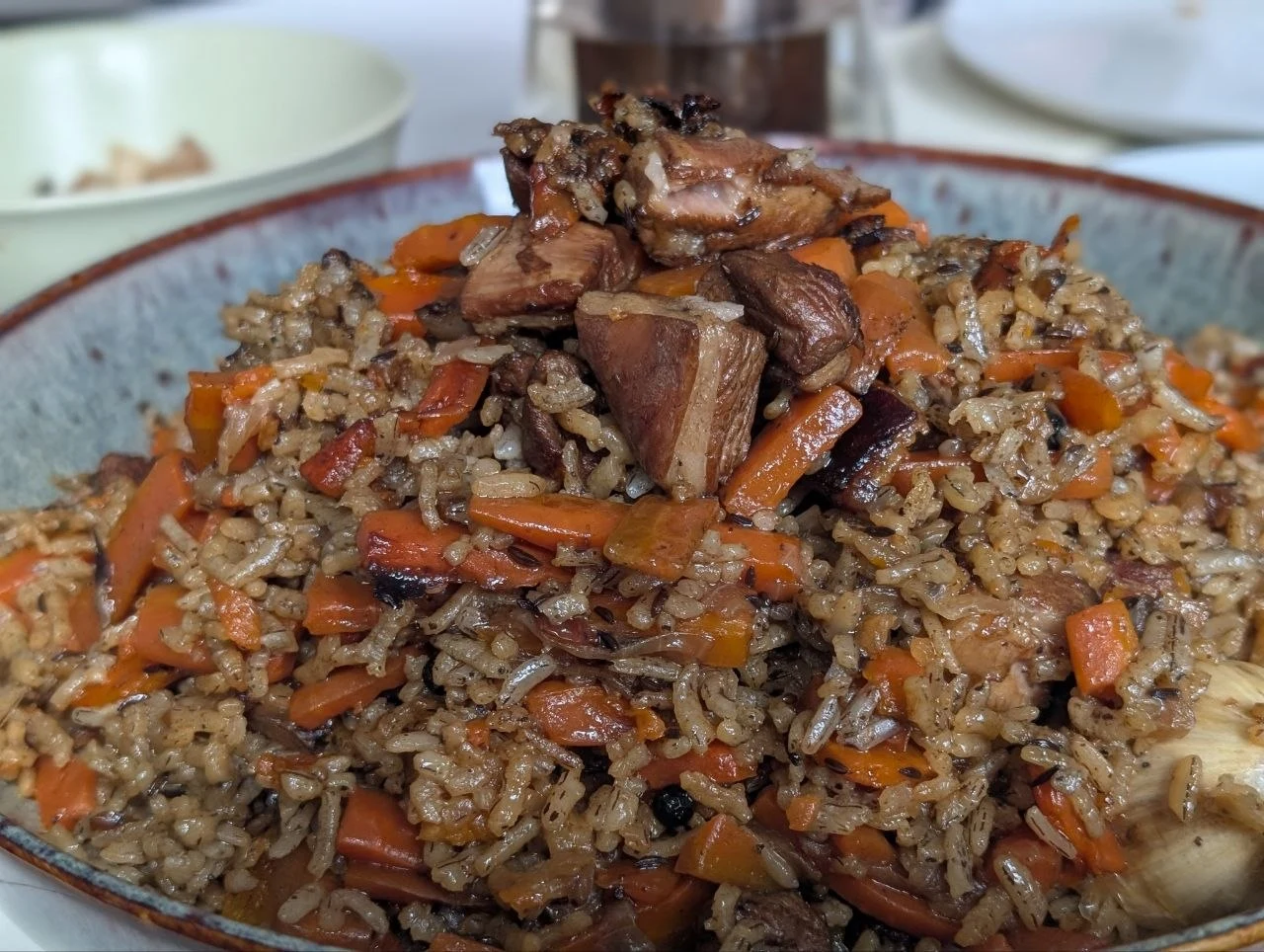
Plov is the rice dish many visitors want to try first. UNESCO's palov culture entry describes its place in everyday meals, hospitality, and celebrations. It combines rice with ingredients such as meat, vegetables, and spices; cooks and regions prepare their own versions.
Ask what is in the serving and whether the price is per portion or for a shared dish. If the kitchen offers extras, ask which are included and which cost more. Start with a portion that fits your appetite before ordering several other substantial dishes.
A plov center can make a useful lunch stop, but confirm serving hours for the actual venue. Do not build a day around an unverified claim that a restaurant serves the dish at any hour. If you want a particular regional version, ask the venue or a knowledgeable local guide to explain it.
Samsa, manti, and lagman
The official cuisine overview introduces these dishes and links to individual descriptions. They provide useful starting points for a varied food itinerary.
Samsa is a savory pastry. Ask about the filling and cooking fat; the name alone does not tell a vegetarian what is inside. If you want a fresh serving, ask when the next batch will be ready rather than assuming a display tray has just left the oven.
Manti are steamed dumplings. Check the filling, portion size, and any sauce or dairy served with them. If you are sharing, ask how many pieces come in an order and whether another vegetable dish would suit the meal.
Lagman is a noodle dish with different preparations. Ask whether the version is soupy or fried, what meat or vegetables it includes, and how the kitchen handles chili. A familiar-looking name can lead to a different dish from the one you expected.
Grilled dishes, soups, and bread
The tourism board's gastronomy page introduces grilled meats, soups, and breads alongside the better-known dishes. Ask which items the kitchen prepares that day and how large each serving is.
For grilled skewers, check the meat, the number of skewers in an order, and whether bread or salad is separate. For soup, ask about broth as well as visible ingredients. Removing pieces of meat does not make a meat-stock soup vegetarian.
Order bread in an amount you can use and ask your host about local table customs. A shared meal is easier when you agree what you want before several dishes arrive. You can leave space for tea or fruit rather than ordering a large main course at every stop.
Explore a bazaar with a purpose
In Tashkent, the official Chorsu overview describes food sections alongside produce, spices, dried fruit, and other goods. Go with a short list of things to explore and leave time to ask prices and questions.
For a purchase by weight, confirm the unit, quantity, and total. Ask before tasting or photographing a vendor. Check packaging if you intend to carry the purchase through the rest of the trip. Gifts such as fresh produce, meat products, dairy, seeds, and some other foods may face restrictions when you return home; check your destination customs rules before buying them for your suitcase.
Keep small spending money accessible and your larger reserve secure. A food tour or guide can help with explanations, but ask whether tastings, meals, and transport are included in the price.
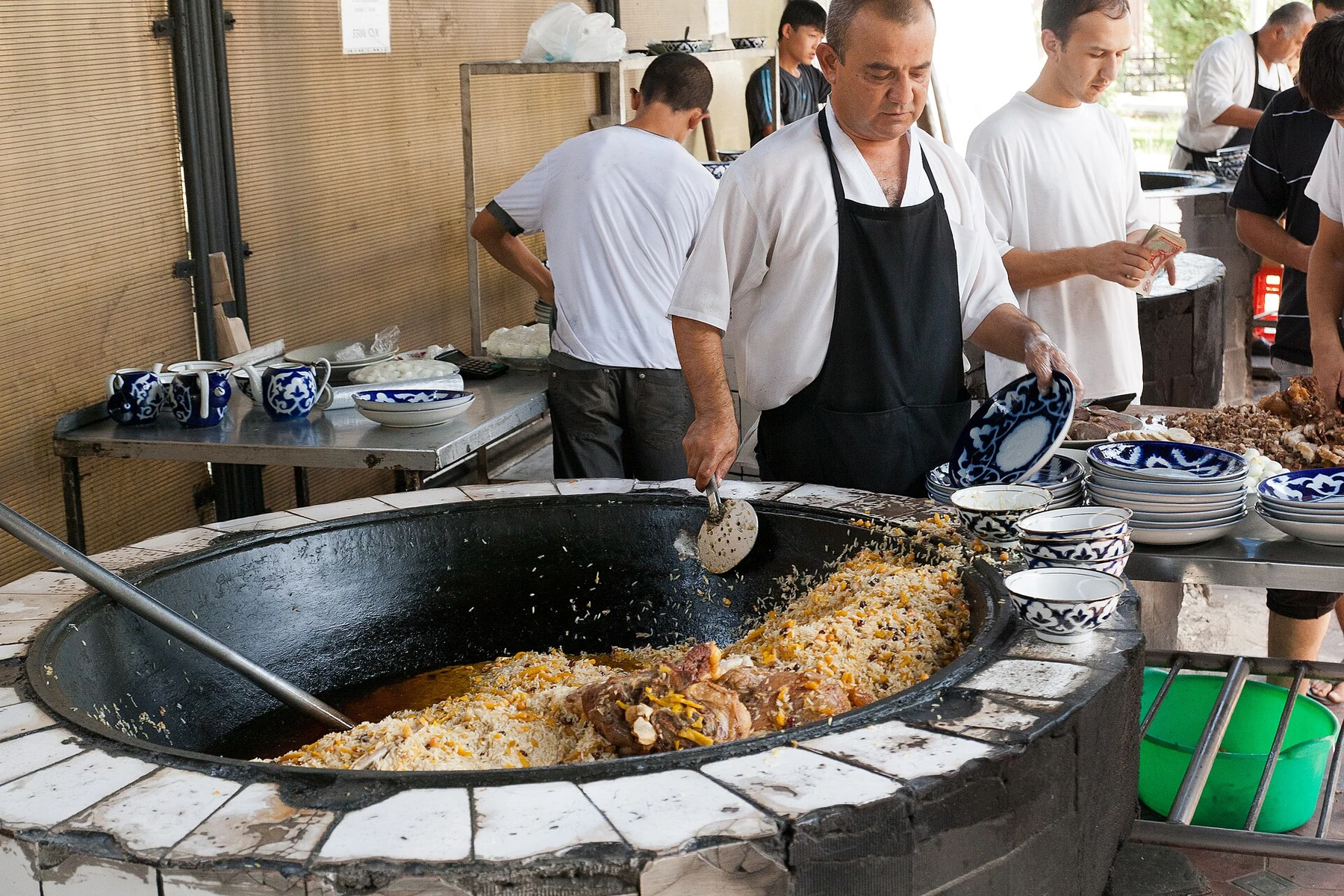
Cooking plov in Tashkent. Photo: Ekrem Canli. CC BY-SA 3.0.

Vegetarian and vegan travelers
Describe the ingredients you avoid rather than relying on a single label. Ask about meat stock, animal fat, dairy, eggs, and the cooking surface as relevant to your diet. A vegetable filling and a vegan preparation are different questions.
The Tourism Committee's September 2026 restaurant initiative describes work at selected establishments on English menus, allergen information, and vegetarian options. It does not establish that every restaurant has those facilities. Check the actual menu and speak to staff before choosing a venue for a specific need.
For a useful request, explain: “I do not eat meat, fish, or meat broth. Which dish can the kitchen prepare without them?” Add dairy and eggs if you avoid those too. Keep a checked translation in Uzbek or Russian available on your phone and on paper.
Choose accommodation that can discuss breakfast with you before arrival. On a long excursion, arrange a suitable meal or packed alternative in advance. See the accommodation guide for questions to send a property.
Allergies and cross-contact
If you have an allergy, name the exact allergen and explain the seriousness. Ask about sauces, garnishes, cooking oil, shared equipment, and cross-contact. A dish without a visible allergen can still be unsuitable.
If staff cannot confirm how the kitchen handles the risk, choose another option. A translated card helps communication but cannot certify a kitchen. Discuss travel preparation and emergency planning with your clinician and use the CDC destination guidance or the relevant health service in your country.
Carry prescribed emergency medicines as directed by your clinician and confirm import requirements before travel. Keep them accessible during transport and follow any storage requirements. Arrange insurance and know how to contact its assistance team.
Order with a clear price and portion size
Before ordering, ask whether the amount is per item, per serving, by weight, or for a shared platter. Check whether bread, tea, water, sides, and service are included. A written menu or written total helps if you do not share a language.
When you ask for a recommendation, add your appetite and budget. “One light lunch for one person” gives the server more useful direction than “bring the best things.” For a group, agree whether you are sharing and check dietary needs before selecting a communal dish.
Review the bill while staff can explain it. Look for service charges before deciding on a discretionary tip. Our money guide covers payment checks and small cash reserves.
A food-focused day without overbooking
Start with breakfast at your accommodation, a market visit or short walk, and a main lunch at a venue you have checked. Leave the afternoon for sightseeing and choose a lighter evening meal if lunch was substantial.
Across a week, vary the meal format: a plov lunch, a dumpling meal, a noodle dish, and a market visit. Leave space to repeat something you enjoyed. Ask your guide about regional differences and the cook's own preparation rather than trying to complete a universal “must eat” list.
For a cooking class, confirm the menu, language, group size, dietary arrangements, and whether transport and the meal are included. Check accessibility if you need to sit while preparing food or cannot use stairs.
Sources and review
We reviewed UNESCO's palov entry, official cuisine and Chorsu information, the Tourism Committee's restaurant-access initiative, and CDC guidance on 28 October 2026. Food examples describe dishes to ask about. Confirm ingredients, allergen handling, hours, and prices with the kitchen serving your meal.
Plov with lamb and carrots. Photo: Postovalov. CC BY-SA 4.0.
