For an independent Uzbekistan trip, build your budget around the room you want, the cities you will visit, and how much private transport you need. A couple sharing a room can spend less per person than a solo traveler using the same hotels. International flights can outweigh several days of local spending, so compare the complete itinerary before booking.
This guide uses editorial planning allowances, not surveyed prices or bookable offers. The worked examples show the arithmetic you can replace with your own quotes. We checked the linked sources on 28 October 2026.
Start with the total trip cost
Count nights and travel days separately. An eight-day trip with seven hotel nights needs eight days of meals and transport, even if the final night is on a flight. Include a room for an early arrival if you need guaranteed access before normal check-in.
Use these categories:
- International airfare, checked bags, seat selection, and connections.
- Accommodation, breakfast, and any separately charged tourist tax.
- Intercity trains or flights and transfers at both ends.
- Food, drinks, sightseeing, and guides.
- Local transport, phone service, insurance, and visa costs if applicable.
- A reserve for changes, card fees, and an extra night.
For your route, compare our first-trip itinerary with the best time to visit. Adding Khiva means budgeting for its transport and nights as well as its sights.
Three spending styles to compare
A lower-cost independent trip
Start with a working allowance of US$45–70 per person per day, excluding international flights. This assumes modest accommodation, local meals, shared or public transport where suitable, and selected paid sights. It is a budget target to test against quotes. A solo room or a private transfer can push you above it.
Choose fewer bases and stay longer in each. Check whether breakfast is included and whether an attractive room price excludes taxes. Keep the activities you most want to do; reduce unnecessary hotel changes before cutting the whole sightseeing budget.
A comfortable trip with some convenience
Test an allowance of US$90–140 per person per day, sharing a private room. This leaves more space for a central hotel, restaurant meals, occasional taxis, and a guide for a day. Your room selection and the number of private excursions will determine whether that range fits.
A trip with premium rooms and private guiding
Begin your own calculation at US$180 per person per day or more, then add the actual hotel and guide quotes. There is no useful upper ceiling for premium travel. Ask whether the guide quote includes a vehicle, entrance tickets, meals, overtime, and the driver's accommodation on longer routes.
A worked eight-day example for two people
The following is one hypothetical budget per person, assuming two adults share one room for seven nights. These are deliberately rounded planning inputs, not current market prices:
- Room: US$80 per night for the room, divided by two, for seven nights = US$280.
- Meals and drinks: US$25 per day for eight days = US$200.
- Intercity transport allowance = US$90.
- Airport and local transport allowance = US$60.
- Sights and activities allowance = US$60.
- Phone allowance = US$15.
- Contingency reserve = US$120.
Total: US$825 per person, plus international airfare, insurance, any visa fee, and any accommodation tax excluded from your room quotes. The combined budget for two people is US$1,650 before those exclusions.
A solo traveler paying the same US$80 room rate would add US$280, giving US$1,105 under the other assumptions. Private transport costs may also change when you cannot split them. Replace each number with a dated quote before treating the example as your spending limit.
Planning in euros, pounds, or dollars
Keep your master budget in your home currency and record each booking's charging currency. A room displayed in dollars may settle in another currency under the property's terms. Your bank may add a foreign-transaction fee or use a rate different from the one you saw while planning.
Compare a bank's buying and selling rates before exchanging cash. Kapitalbank's published exchange page shows that USD and EUR have separate spreads; the headline reference rate is not a guaranteed counter quote. Our money guide explains a worked conversion and how to compare the final amount received.
A useful spreadsheet has columns for the original currency, amount, home-currency estimate, payment deadline, cancellation terms, and whether you have paid. Keep a separate reserve rather than counting unused credit as cash available for a rural outing.
International flights and the hidden connection cost
For U.S. departures, compare the total cost of a connection with a longer layover against a more expensive itinerary with fewer changes. European travelers should include bags, airport transfers, and any overnight transit stay when comparing low headline fares. Check transit requirements for every country in the booking against the passport you will use.
Price the journey from home to your first hotel. If you arrive exhausted at night, an arranged transfer and an extra hotel night may be worth budgeting for. A cheap flight that forces an additional domestic journey can cost more after luggage, transfers, and time.
Use the airline's own booking and baggage information for the ticket you intend to buy. Keep separate-ticket connections generous enough to collect bags, change terminals if necessary, and check in again.
Hotel costs that deserve a second look
Before paying, ask the property for the total for all guests and nights. Confirm breakfast, tourist charges, registration arrangements, and the payment method. Check the price for your actual room type, not the cheapest photograph in a search result.
A central property can save several taxi rides. A station-area property can help with an early train but may add journeys to the places you want to see. Compare the combined cost of the room and the movements it creates. Our accommodation guide gives a city-by-city approach.
Transport and sightseeing allowances
Use the official passenger-rail operator and its ticketing channels for your dates. Record the service, seat class, passenger details, and refund rules. A slower train may be a reasonable trade if it preserves a useful day; an inconvenient arrival may require another transfer or hotel night.
For a private excursion, ask for a written total with the route, vehicle, guide language, entrance tickets, meal arrangements, and cancellation conditions. Agree whether the price is per person or for the whole vehicle. Put any planned shopping into a separate category so it does not swallow your transport reserve.
Cash flow during the trip
Budgeting and payment access are different tasks. Carry a way to pay if your preferred card fails and check the cash needed before leaving a major city. The UK's country guidance notes that international-card acceptance and ATM access can be limited outside the main cities.
Keep small denominations for smaller purchases, save receipts for large transactions, and compare the displayed price with the total charged. If a restaurant adds service, check the bill before deciding on a discretionary tip. Ask about charges rather than assuming U.S. tipping conventions apply.
A booking order that controls surprises
- Choose your travel window and passport-specific entry route.
- Price international flights and a realistic first-night plan.
- Check the intercity journeys that hold the itinerary together.
- Reserve rooms with a clear total and cancellation terms.
- Add guides and activities after transport is workable.
- Recalculate the home-currency total, include fees, and leave a reserve.
Pay extra for the things that improve your own trip: a room you can reach on foot, a guide who answers your questions, or a less rushed connection. You can compare those benefits once you know the full cost.
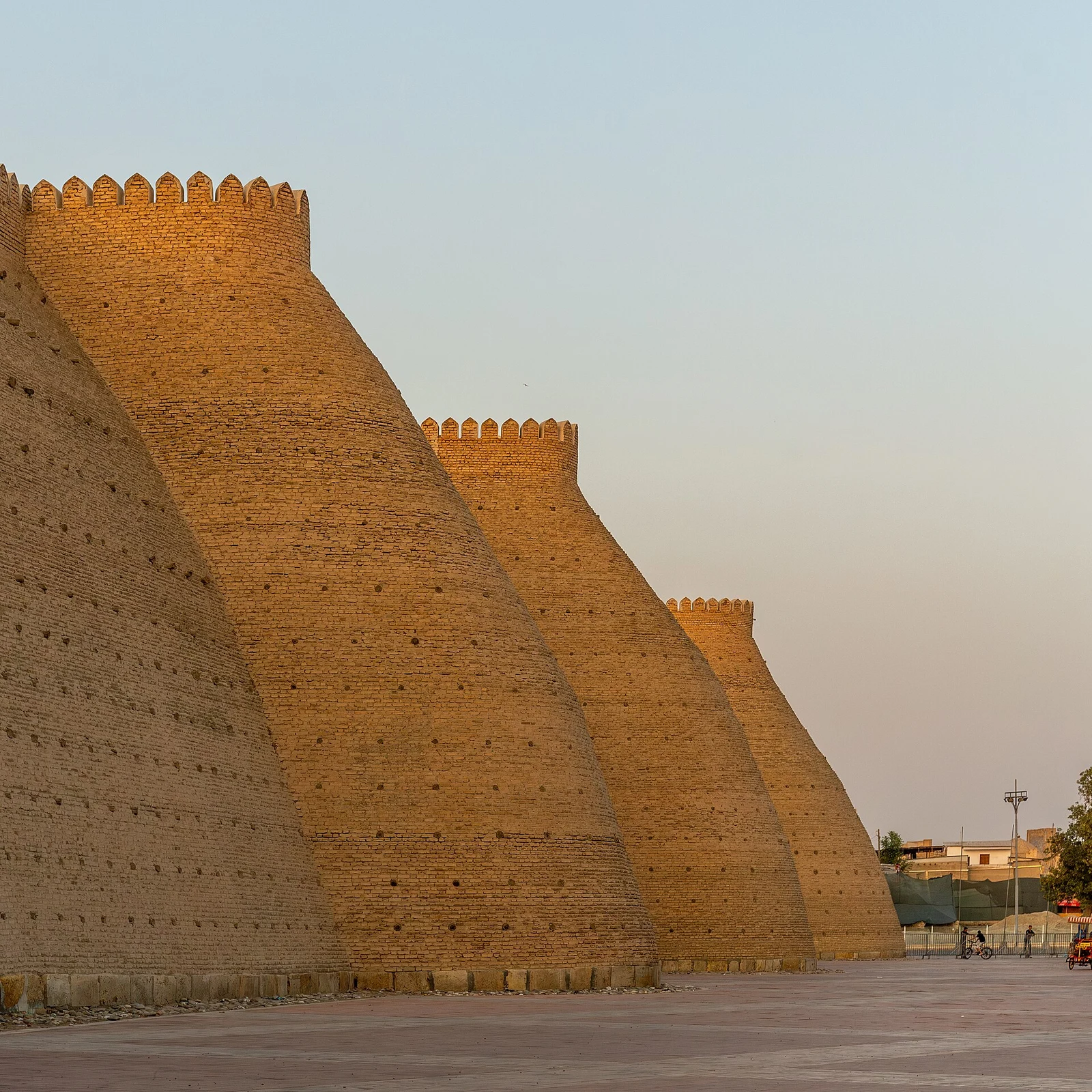
Ark fortress walls in evening light, Bukhara. Photo: Nikolai Bulykin. CC BY-SA 4.0.

Sources and review
We reviewed the linked bank, airline, rail operator, and government travel guidance on 28 October 2026. All spending ranges and worked budget inputs above are Uzbekistan OS planning estimates. Obtain current quotes for your dates; the examples do not establish a price for any hotel, ticket, or service.
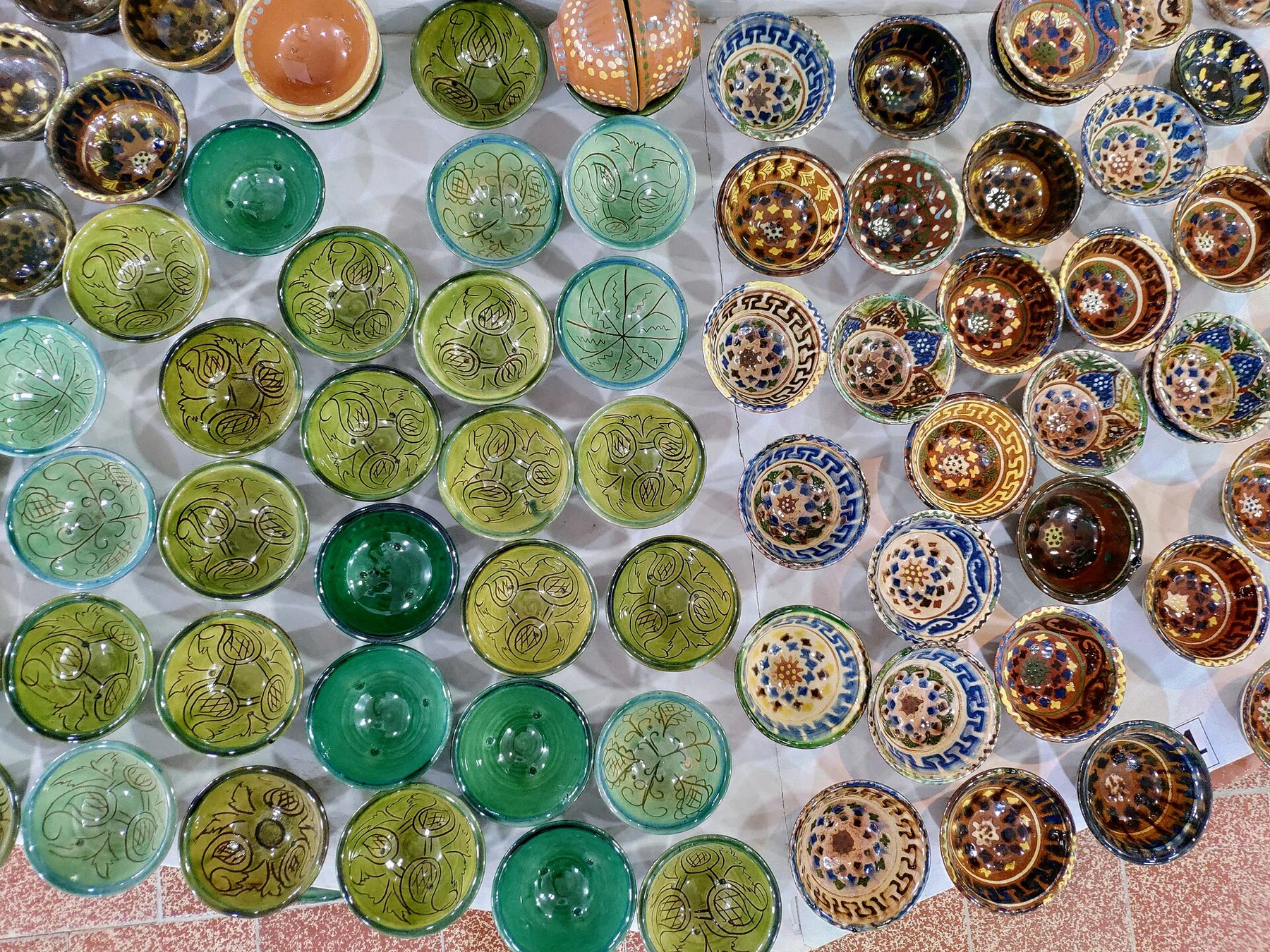
Gijduvan ceramics. Photo: Ekaterina Kvelidze. CC BY-SA 4.0.
